
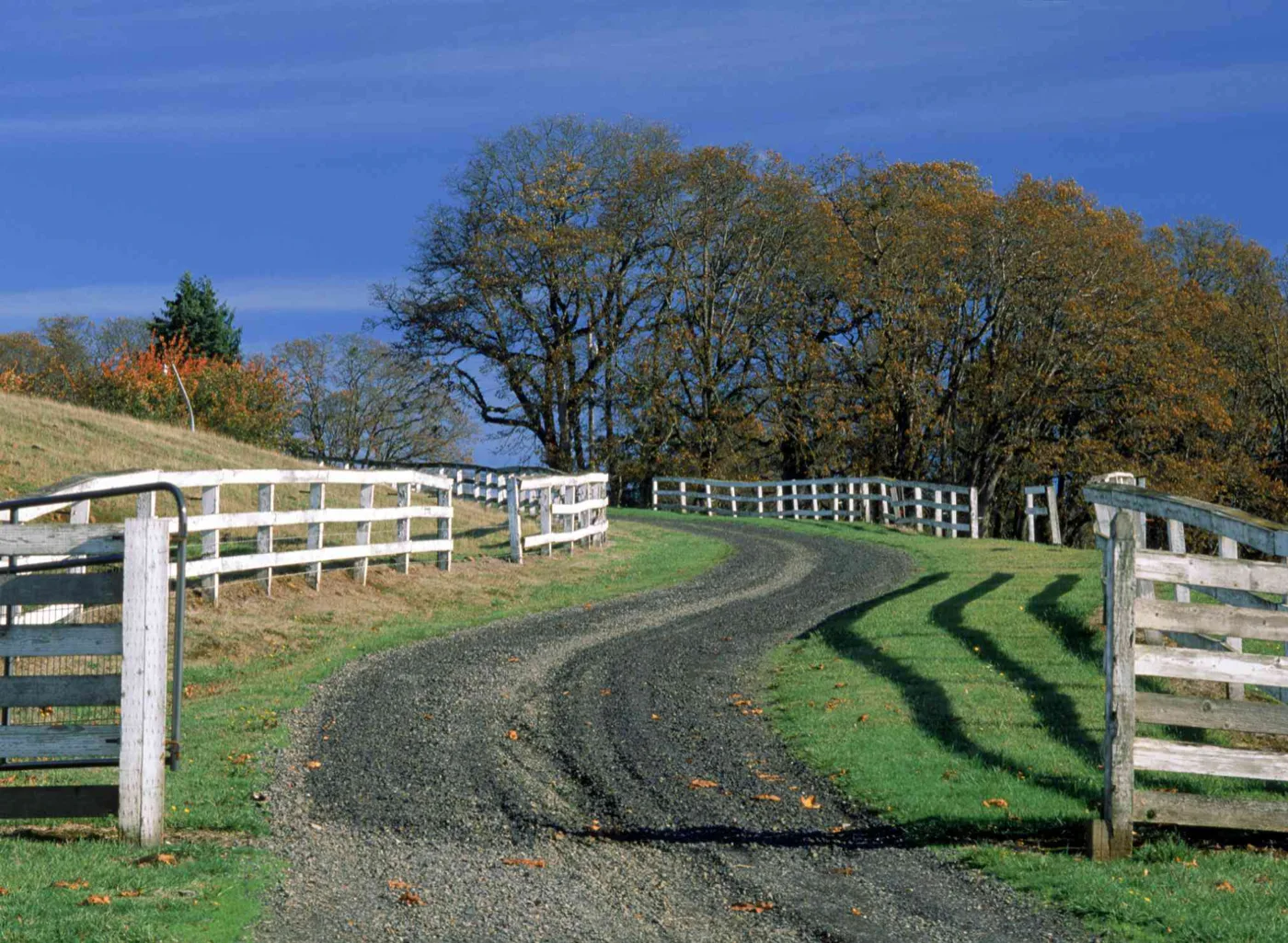
How to build a gravel driveway that survives Idaho winters
A gravel driveway survives eastern Idaho winters when it is built in layers: topsoil stripped off, fabric laid over soft ground, 6 to 12 inches of compacted pit-run for a base, a 3 to 4 inch cap of 3/4-minus gravel, and a crown that sheds water. Gravel dumped straight on dirt is gone by the second spring.
Why gravel fits rural eastern Idaho
Around Rexburg the ground freezes deep, thaws sloppy, and does it again every year. Gravel handles that cycle better than almost any surface. When frost heave lifts the ground, a gravel driveway flexes and settles back with it. A rigid slab cracks instead, and the crack is permanent. Gravel is also the cheapest surface to build, the cheapest to fix, and the only one where a rough winter costs you a regrade instead of a replacement.
It fits how properties out here are laid out, too. Homes off the county roads around Sugar City, Ririe, Menan, and Parker often sit a few hundred feet back from the pavement. At that length, gravel is usually the only surface that makes financial sense, and this valley is full of gravel pits, so material is close by and trucking stays reasonable.
What an eastern Idaho winter actually does to a driveway
Rexburg sits close to 4,900 feet, and in a cold winter frost drives several feet into bare ground. Water in the soil freezes, expands, and lifts whatever sits on top of it. That is frost heave, and the silty farm soils across the valley hold exactly the kind of moisture that feeds it.
The harder season is the thaw. In March and April the ground melts from the top down, so meltwater sits trapped above soil that is still frozen a foot deeper. That top layer turns to soup. This is mud season, and it is when weak driveways die: tires punch through the surface, the gravel gets pushed down into the mud, and by May the driveway is two ruts with a grass strip.
Winter also means months of plowing, and a blade finds every soft spot and high spot on a poorly built surface. The fixes for all of it are the same: drainage, a real base, and compaction.
The build that holds up
A driveway that lasts is a stack of layers, each with one job.
| Layer | Material | Typical depth | The job it does |
|---|---|---|---|
| Strip | Topsoil removed down to firm subsoil | 4–8 in off | Organic soil holds water and pumps under load; it has to go |
| Fabric | Geotextile, on soft or silty ground | One layer | Keeps base rock from sinking into the soil during thaw |
| Base | Compacted pit-run gravel | 6–12 in | Carries the load and drains water away from the surface |
| Surface | 3/4-minus crushed gravel | 3–4 in | Fines lock the rock into a tight, smooth cap |
| Shape | Crown plus ditches | 2–4 in of crown | Sends water off the drive instead of into it |
A few notes on those layers, because the words on a quote matter. Pit-run is bank-run gravel straight from the pit, big rock down to fines, and it makes a strong, cheap base when compacted in lifts. The top cap should be crushed 3/4-minus, often sold around here as road mix: rock three quarters of an inch and smaller with fines that bind tight under traffic. Round washed rock stays loose forever and rolls under your tires, so keep it out of the driving surface.
The crown does quiet, constant work. Build the center 2 to 4 inches higher than the edges and water runs off sideways instead of soaking in or channeling down your wheel tracks. Pair it with shallow ditches where the ground allows, and drop a culvert in where the drive crosses any low spot or irrigation ditch. This is canal country, and a driveway that dams water makes problems for you and the neighbors fast. Shaping the subgrade, the crown, and the drainage is grading and leveling work, and it decides how the driveway behaves every spring afterward.
What it costs
Across the industry, a new gravel driveway installed runs about $1 to $3 per square foot, so most residential drives land between $1,500 and $6,000. A long rural lane with culverts and heavy base work runs past that. Upkeep is where gravel wins over time: a regrade and an occasional fresh top layer cost a fraction of the original build, while a cracked slab is a demolition bill.
Every one of those numbers is a market range. Your price rides on length, width, how soft your ground is, and how much base it takes to fix that. The real number comes from a free on-site estimate, not a chart.
Keeping it alive year after year
Gravel driveways do not wear out, they wear down, and the maintenance rhythm here follows the seasons.
Regrade in late spring, after mud season and once the frost is fully out. That pass pulls the gravel out of the wheel ruts, rebuilds the crown, and smooths any washboard before summer traffic sets it.
Top it up every one to three years. Traffic and plowing slowly grind and scatter the surface rock, so a fresh load of road mix, spread and packed, brings the cap back. A dump trailer load of gravel hauled in and feathered over the worn spots handles most years; a full re-cap is rarer. Do this work in the warm months so it locks in before the first plow pass.
Plow smart. Run shoes or skids on the blade set a touch high for the first storms, then lower them once the surface freezes solid. A frozen, crowned gravel drive plows clean all winter.
And if you are building the driveway as part of a bigger project, the base work should happen with the rest of the dirt work. Our guide to preparing a lot for a new build around Rexburg shows where the driveway falls in the sequence, and why it goes in before the concrete trucks arrive.
FAQ
How much does a gravel driveway cost? Across the industry, an installed gravel driveway runs about $1 to $3 per square foot, which puts most residential drives between $1,500 and $6,000. Long rural lanes run past that. Length, width, and how much base your ground needs move the number, so the real price comes from a free on-site estimate.
How thick should a gravel driveway be in Idaho? Plan on 8 to 12 inches of material total: a compacted pit-run base of 6 to 12 inches doing the structural work, capped with 3 to 4 inches of 3/4-minus crushed gravel. Soft or wet ground needs the thick end plus fabric underneath. A couple inches of loose rock on dirt is not a driveway.
Do I need fabric under my gravel driveway? On soft, silty, or wet ground, yes. Geotextile fabric keeps the gravel from being swallowed by the soil underneath, which is exactly what happens during spring thaw here. On dry, firm, well-drained ground you can often skip it. The give of the ground underfoot in April tells you more than any rule.
When is the best time to build a gravel driveway in eastern Idaho? Late spring through fall, once the frost is out and the ground has dried up. Summer traffic then packs the surface tight before winter. Fresh loose gravel laid just before the snow tends to end up in the lawn with the first plow pass, so give a new top coat a season to lock in.
Can you plow a gravel driveway without wrecking it? Yes, if the driveway is smooth and crowned and the plow runs shoes or skids set slightly high, especially early in the season before the surface freezes solid. Once the gravel locks up hard in December it plows almost like pavement. Most gravel scattered by plowing rakes back in with the spring regrade.
Get a driveway built for this climate
The difference between a gravel driveway that lasts and one that disappears is everything under the surface, and that part only gets built once. Glitter Gulch Ground Works builds and repairs gravel driveways around Rexburg, Rigby, St. Anthony, Idaho Falls, and the rest of the Upper Valley. Owner-operated, free estimates, straight answers. Call 701-421-4235 or request a free estimate and get a real number for your drive before the next winter tests it.